

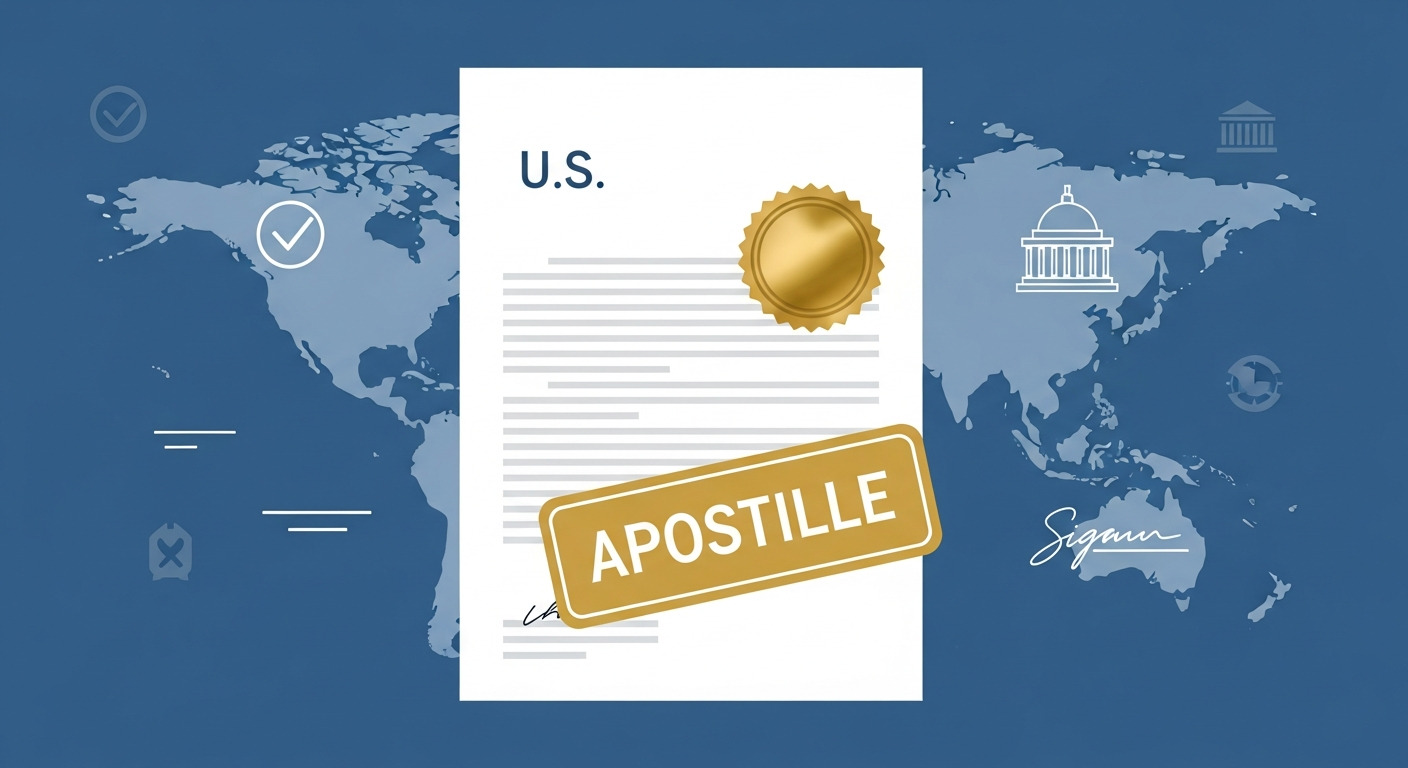
What Is an Apostille? A Simple Guide for U.S. Documents
If you’re preparing U.S. documents for use overseas, the term apostille will come up almost immediately. It’s a standard form of authentication that makes your documents valid in any country that’s part of the Hague Apostille Convention. The process is straightforward—once you understand what the apostille actually does and how to get one.
What an Apostille Does
An apostille is a government-issued certificate that confirms the authenticity of:
-
The document’s signature
-
The capacity of the official who signed it
-
The seal or stamp that appears on the document
It doesn’t validate the content inside the document—it only confirms that the document is legitimately issued or notarized in the United States.
Which U.S. Documents Commonly Need an Apostille
Most personal, academic, and business records can be apostilled if they are properly issued or notarized. Common examples include:
-
Birth and marriage certificates
-
Divorce decrees
-
FBI background checks
-
Power of attorney documents
-
Diplomas, transcripts, and school letters
-
Corporate documents issued by a Secretary of State
-
Notarized affidavits and agreements
If the document is federal (such as an FBI check), it requires an apostille from the U.S. Department of State. State-issued documents must be apostilled by the Secretary of State where they were issued.
How to Get an Apostille in the U.S.
The steps depend on the type of document, but the basic process is consistent:
-
Make sure the document is ready
-
Vital records must be certified copies
-
Notarized documents must be correctly notarized—no errors or missing fields
-
-
Determine the issuing authority
-
State documents → Secretary of State
-
Federal documents → U.S. Department of State
-
D.C.-issued documents → Office of Notary Commissions & Authentications
-
-
Submit the document for apostille
-
By mail or in person
-
Processing times vary widely by state and federal agency
-
-
Receive your apostilled document
The apostille is attached directly to your document and is recognized by all Hague-member countries.
When You Don’t Need an Apostille
If the destination country is not part of the Hague Convention, the document will require embassy legalization instead. The steps are different and usually involve multiple offices. (DC Consular handles both processes.)
Common Issues That Delay Apostilles
Small details can cause rejections. The most frequent problems include:
-
Outdated vital records
-
Incorrect notarization
-
Documents sent to the wrong state authority
-
Missing signatures, seals, or identification statements
-
Submitting federal documents to a state office
A quick document check before submission can prevent delays.
Why People Use Apostille Services
The process is technical, time-sensitive, and varies by state. Many clients choose a professional service to avoid mistakes and get the apostille as quickly as possible, especially when documents are needed for:
-
Work abroad
-
Residency applications
-
International marriage
-
Study programs
-
Business formation
-
Real estate and legal matters
Final Thoughts
An apostille is a simple but essential certification when you’re sending U.S. documents overseas. Understanding which authority handles your document—and making sure it’s properly prepared—can save you time and frustration.
If you need fast, accurate processing, DC Consular can handle every step on your behalf.